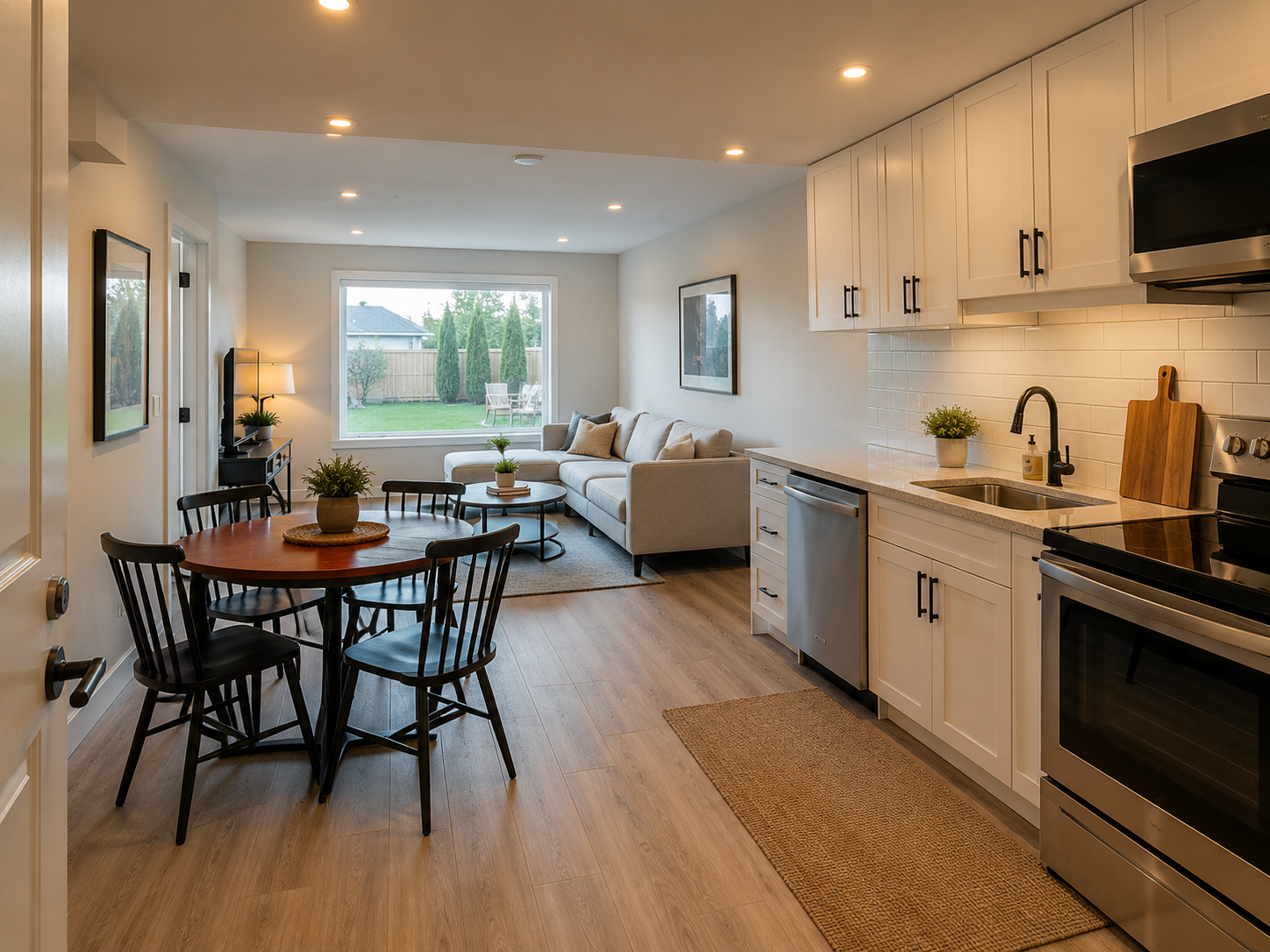
A legal basement suite in Airdrie can generate $1,400 to $1,800 per month in rental income. At current mortgage rates, that's the difference between a payment that stretches your budget and one that's genuinely manageable. It's one of the most meaningful financial tools available to Airdrie buyers right now — and one of the most misunderstood.
Legal vs. Illegal — Why the Distinction Matters More Than You Think
The first thing to understand is that "has a basement suite" and "has a legal basement suite" are not the same thing. The gap between the two is significant — for your insurance, your financing, your liability as a landlord, and your ability to use that rental income to qualify for a mortgage.
An illegal suite is one that was built without permits and doesn't meet the Alberta Building Code or Airdrie's zoning requirements. Thousands of them exist across Airdrie and Calgary. They may look perfectly functional and even be well-built. But if something goes wrong — a fire, an injury, a flood — your insurance company can deny coverage because the suite was unpermitted. That's not a theoretical risk. It happens.
A legal suite has been built to code, inspected by the City, and registered as a secondary suite. That designation protects you, your tenant, and your investment. It also means your lender will count the rental income when calculating your mortgage qualification — which can meaningfully change what you can afford.
What Makes a Suite Legal in Airdrie
The Income Math
Airdrie's rental market is active. A well-finished two-bedroom legal suite is currently renting for $1,400 to $1,800 per month depending on the neighbourhood, finishes, and included utilities. Here's what that income actually means for your carrying costs.
That effective carrying cost of roughly $1,750 per month is lower than renting a comparable home in Airdrie. The suite doesn't eliminate your housing cost — but it changes the conversation entirely for buyers who are stretching to get into the detached market.
How Lenders Count Suite Income
Whether and how much of your suite income counts toward mortgage qualification depends on your lender and the suite's legal status.
For an insured mortgage (less than 20 percent down), lenders generally count 50 to 100 percent of rental income from a legal suite — depending on the lender's internal policies and whether the suite is currently tenanted. An illegal or unpermitted suite typically doesn't count at all.
For a conventional mortgage (20 percent or more down), lenders have more flexibility, but the suite still needs to be legal to count reliably. Your mortgage broker is the right person to clarify exactly how a specific lender will treat suite income for your application.
What to Check Before You Buy
If a listing says "legal suite" or "mortgage helper," here is your due diligence list before you remove subjects:
- Ask for the permit history. A legal suite will have a development permit and building permit on file with the City of Airdrie. Ask your agent to request these — not just the seller's word that it's legal.
- Check the ceiling height. Measure it yourself or have your inspector do it. 6'5" minimum throughout. Many basements that look fine visually don't meet this.
- Verify the fire separation. A home inspector can identify whether the fire separation between units appears adequate. This is one of the most commonly incomplete elements in older suites.
- Confirm the egress windows. Every bedroom needs one. Check the dimensions — many suites have windows that look reasonable but don't meet the minimum opening size.
- Look at the separate entrance. It needs to be a proper exterior door, not a door through a shared utility room or laundry space.
- Check zoning. You can confirm permitted uses on any Airdrie property through the City's online parcel viewer or by calling the planning department.
Adding a Suite to a Home That Doesn't Have One
If you're considering buying a home without a suite and adding one, the process is straightforward but has a real cost. A professionally built, permitted legal suite in Airdrie typically runs $60,000 to $100,000 depending on the basement's existing state, the finishes, and whether structural work is required.
The City of Airdrie has been supportive of secondary suites as part of its housing strategy, and the permitting process — while not instant — is navigable. Budget three to six months from permit application to final inspection for a typical basement conversion.
Whether the investment makes financial sense depends on your specific property, your mortgage situation, and the rental income you can realistically generate. It's worth running those numbers before you commit to a purchase based on the assumption that you'll add a suite.
The Landlord Side of the Equation
Becoming a landlord is a real responsibility and it's worth being honest about that before you buy a home with a suite. Alberta's Residential Tenancies Act governs the landlord-tenant relationship, and it has specific rules about notice periods, rent increases, entry rights, and dispute resolution.
The short version: you need to be comfortable with having a tenant on your property, managing maintenance requests promptly, and understanding your obligations under Alberta law. Most people who go into it thoughtfully find it manageable — but going in unprepared leads to friction. The Alberta Residential Tenancy Act is publicly available and worth reading before you take on a tenant for the first time.
Andre knows which Airdrie communities and neighbourhoods have the most legal suite inventory, and can help you verify a suite's legal status before you make an offer. If you're also thinking about adding a suite to a home that doesn't have one, that's a conversation worth having upfront.
Ask Andre